
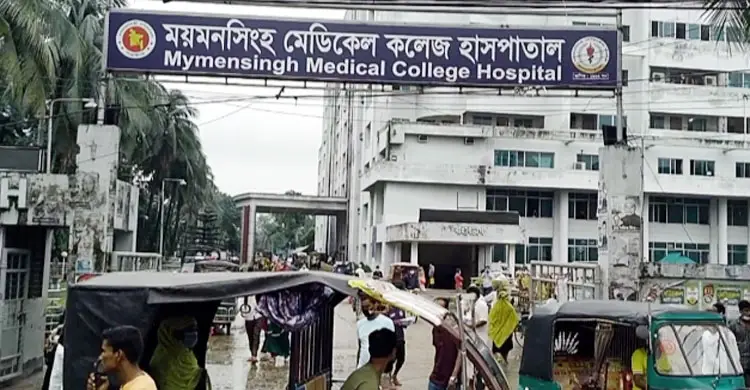
Abu Ubaida :: Health authorities in Mymensingh say HIV infections are rising at an alarming rate, particularly among young men aged 19 to 35, with a significant proportion identifying as homosexual.
Zahid (pseudonym), an honors student at Anand Mohan College, tested positive for HIV after persistent skin allergies and itching led him to seek treatment at Mymensingh Medical College Hospital five months ago. Fahim (pseudonym), another student from Valuka, was similarly diagnosed after visiting the hospital for free testing. In May, a family in a nearby upazila—husband, wife and three children—were all found to be HIV-positive, highlighting the risk of household transmission.
Data from the hospital’s HIV Testing and Counselling (HTC) centre shows that over the past five years, 11,208 people were tested, with 60 confirmed HIV-positive. From February 2020 to October 2021, two cases were detected among 3,392 tests. Between November 2021 and October 2022, 10 cases were identified from 1,729 tests. From November 2022 to October 2023, 14 infections were confirmed among 3,296 tests, and from November 2023 to December 2024, 34 cases were detected from 2,791 tests. In the last two years, two patients have died. Among the 58 living patients, 53 are men, including 40 homosexuals.
Counsellors at the HTC centre report that many young people visit with fatigue, fever, and headaches while awaiting test results. Officials said HIV transmission in Mymensingh is mainly linked to unprotected sex, shared needles, unscreened blood, and mother-to-child transmission.
Abdul Al Mamun, HTC centre administrator, said, “Most of those affected are men aged 19–35, and many are students in schools, colleges, and universities. Social and moral awareness is urgently needed to curb this trend.”
Nurul Amin Kalam, general secretary of Mymensingh Citizens’ Movement, said families and educators must play an active role in raising awareness to prevent young people from risky behaviour.
Professor Masum Billah of Nasirabad College added that strong family bonds, religious guidance, and cultural values can help prevent infections. “Young people are the hope of their families. It is vital that they understand the dangers of HIV/AIDS, and awareness campaigns must be strengthened,” he said.
Dr. Zakiul Islam, deputy director of Mymensingh Medical College Hospital, emphasised the importance of early prevention: “Being aware and taking precautions in daily life is key to reducing the risk of HIV infection.”








আপনার মতামত লিখুন :