
Abu Ubaida :: While much of the world has made significant progress in reducing HIV infections and AIDS-related deaths, Bangladesh is moving in the opposite direction, with both cases and fatalities continuing to rise—triggering concern among public health experts.
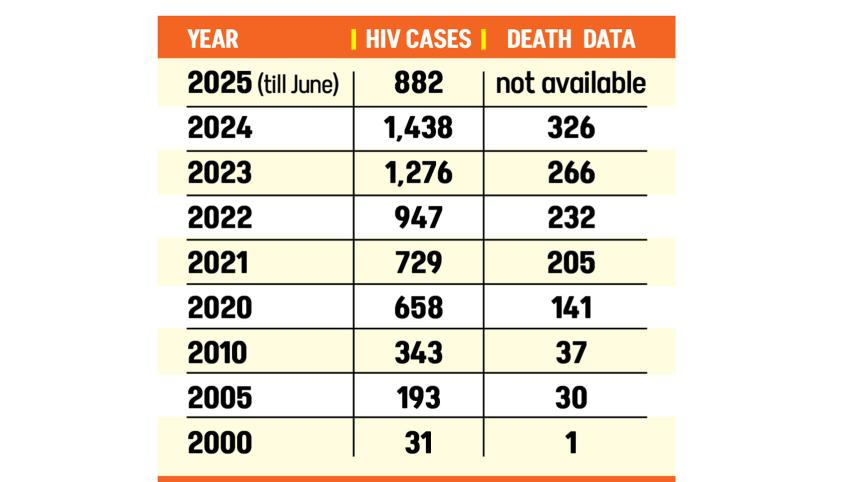
According to data from the Directorate General of Health Services (DGHS), Bangladesh recorded 1,438 new HIV cases and 326 HIV-related deaths in 2024. The figures represent a clear increase from 2023, when 1,276 people tested positive for HIV and 266 deaths were reported.
The upward trend has continued into 2025. In the first six months alone, 882 new HIV-positive cases were identified, a senior DGHS official said, noting that data on HIV-related deaths for the year is still being compiled.
HIV weakens the body’s immune system, making individuals vulnerable to infections and, if untreated, progressing to Acquired Immune Deficiency Syndrome (AIDS).
Health officials attribute part of the rise in reported cases to expanded testing across the country. However, they estimate that around 23 percent of people living with HIV in Bangladesh are still unaware of their status—raising concerns about undetected transmission.
Officials warn that reduced funding for prevention services could further accelerate infection rates and jeopardize Bangladesh’s goal of eliminating AIDS by 2030.
Preventive efforts suffered a major setback after the expiry of a government-run programme under the National Tuberculosis, Leprosy and AIDS/STD Programme (TB-L & ASP) in June last year. The lapse disrupted key interventions such as the distribution of condoms, needles, and syringes among high-risk groups—including people who inject drugs, female sex workers, and transgender individuals.
These populations, numbering around 322,000 nationwide, accounted for roughly half of all HIV cases recorded in 2024.
Bangladesh detected its first HIV case in 1989. Since then, total recorded HIV infections have reached 12,422, with 2,412 deaths reported up to last year.
Globally, however, the trajectory has been markedly different. Following the identification of HIV in the United States in 1981, coordinated international responses led to major reductions in infections and deaths.
According to the UNAIDS Global AIDS Update 2025, global HIV infections have fallen by 40 percent and AIDS-related deaths by 56 percent since 2010. Annual new infections declined from 2.9 million in 2000 to 1.3 million last year, while deaths dropped from 1.8 million to 630,000 over the same period.
Officials at the DGHS-run TB-L & ASP programme say Bangladesh’s gradual rise over the decades contrasts sharply with these global gains.
One contributing factor to rising case numbers is the expansion of HIV screening. Over the past decade, the number of HIV tests increased dramatically—from just over 83,000 in 2016 to more than 1.6 million. An additional 1.03 million people were tested as part of routine health screenings during this period.
As a result, about 77 percent of people estimated to be living with HIV in Bangladesh were aware of their status by last year. This, however, still falls short of the UNAIDS target set in 2014, which aims for 95 percent awareness by 2030.
With the expiration of the TB-L & ASP programme, the DGHS has increasingly depended on foreign donors to sustain HIV testing and treatment services at specialized centres. Preventive programmes, however, have been more vulnerable to funding shortages.
A DGHS official said gaps in financing have left key populations without consistent preventive coverage in at least 25 districts, increasing the risk of further transmission.
Responding to these concerns, Zubaida Nasreen, deputy director of the AIDS/STD Programme and former line director of the TB-L & ASP, said the apparent rise reflects improved detection rather than a sudden surge in infections.
“These people were always there,” she told The Daily Star on September 25. “Increased testing is now making them visible.”
She acknowledged temporary disruptions following the programme’s expiration but rejected claims that entire districts were left uncovered. Nasreen said a new development project proposal has been prepared by the DGHS and is awaiting approval. Once cleared, she said, preventive services would resume without interruption.
Public health experts caution that unless prevention, funding stability, and early detection are strengthened together, Bangladesh risks falling further behind global efforts to control HIV and AIDS.









আপনার মতামত লিখুন :